Deadwood and Defect Removal
Dead, cracked, hanging, or rubbing branches are identified and removed where practical. Larger limbs are lowered in sections when dropping them freely could damage property.
Connecting consumers with tree service companies in Marietta and surrounding areas
Describe your pruning or clearance needs, and our concierge will help connect you with an independent tree trimming company serving Marietta.
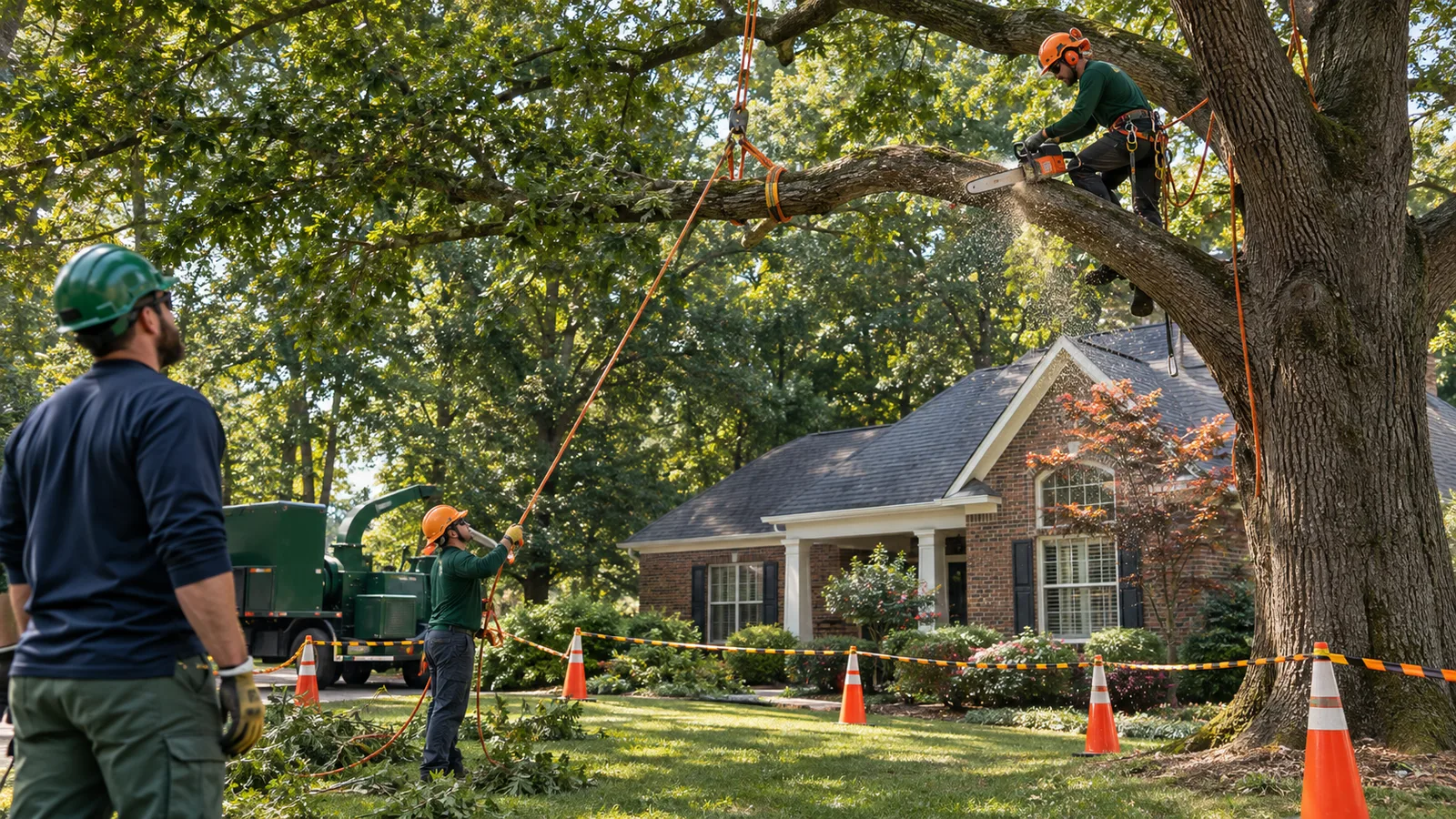
Professional tree trimming in Marietta, GA starts with a clear reason for every cut. A tree may need deadwood removed, clearance from a roof, better branch spacing, or correction of weak growth. The goal is to address that need without stripping healthy foliage or leaving poor cuts that invite decay.
Marietta Tree Removal Concierge is a matching service, not the crew that performs pruning. We use the details you provide to help connect you with an independent tree service company. That provider is responsible for inspecting the tree, recommending cuts, quoting the project, and completing any work you authorize.
A sound plan identifies the branches to remove before cutting begins. It also considers branch unions, canopy balance, clearance needs, equipment access, and where cut material can be lowered safely. You receive a defined scope based on what the tree and property actually require.
Request a Tree Service MatchTrees should be pruned to meet a clear objective. Crown cleaning removes dead, broken, diseased, or poorly attached branches. Crown thinning selectively reduces branch density while retaining the tree's natural form. Crown reduction shortens selected limbs back to suitable lateral branches when properly applied. Structural pruning addresses competing leaders, crossing limbs, included bark, and other growth patterns that may become harder to correct as the tree matures.
Clearance pruning creates appropriate space around roofs, siding, driveways, sidewalks, signs, and outdoor living areas. Branches close to a structure require measured cuts rather than indiscriminate shortening. Topping, which removes large portions of the crown or leaves branch stubs, can trigger weakly attached sprouts and exposes more wood to decay. It is not a substitute for proper reduction pruning.
Marietta's long growing season and summer storms make branch structure and clearance practical concerns. Timing still depends on species, tree health, pruning objective, and weather. Heavy pruning during active stress, drought, or extreme heat may be postponed, while broken or hazardous branches may require prompt attention.
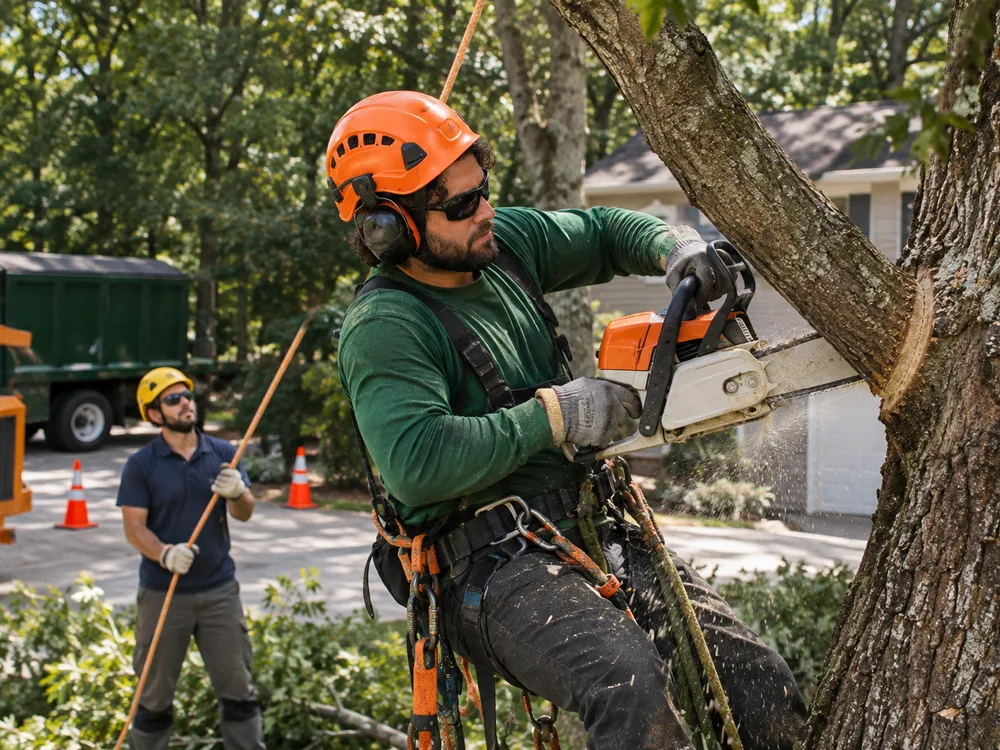
Dead, cracked, hanging, or rubbing branches are identified and removed where practical. Larger limbs are lowered in sections when dropping them freely could damage property.
Selective cuts can reduce competing stems, improve branch spacing, and address weak unions. Young trees often need smaller corrective cuts than mature trees.
Branches can be shortened or removed to create reasonable separation from shingles, gutters, siding, and chimneys while preserving natural growth where possible.
Targeted thinning or reduction may lessen excess end weight and improve branch distribution. Removing too much live foliage at once can stress a tree and is avoided.
The crew plans access, drop zones, rigging points, and equipment placement before cutting. Lawn areas, hardscapes, fences, and nearby structures shape the work method.
Branches and smaller material are gathered after pruning, and the agreed work area is cleared. Cleanup expectations should be written into the scope before work starts.
The tree is viewed from the ground for deadwood, damaged limbs, branch unions, canopy condition, lean, and nearby targets. Access for workers and equipment is reviewed at the same time.
The scope identifies which trees will be trimmed, the objective for each tree, expected clearance, debris handling, and any access limitations. Broad instructions such as “cut it back” are replaced with specific outcomes.
Vehicles, furniture, and movable objects are cleared as needed. The crew establishes a controlled work area and selects climbing, lift, pole-pruning, or rigging methods based on the tree and surroundings.
Cuts are made at suitable branch unions or just outside the branch collar. Heavy limbs may be removed in pieces with ropes to limit impact on the lawn, roof, or nearby plantings.
Cut material is handled according to the agreed scope. The completed work is reviewed for clearance, canopy balance, remaining hazards visible from the work position, and condition of the surrounding property.
Tree trimming in Marietta typically costs about $250 to $800 for a small or moderately sized tree, while large, complex trees may cost $800 to $2,000 or more. These are general estimates, not fixed local prices.
Final cost depends on tree height, canopy spread, branch size, condition, access, proximity to structures or utility lines, climbing or lift requirements, rigging needs, and debris handling. Several trees completed during one mobilization may be priced differently than separate visits. The exact cost is confirmed after an on-property assessment and written scope.
Request a Tree Service MatchTree trimming becomes more complex when limbs extend over a house, enclosed yard, driveway, or neighboring property. A branch that looks manageable from the ground can be heavier than expected and may swing after it is cut. Sectional removal, tag lines, and controlled lowering help manage that movement. Climbers also evaluate whether the tree has sound anchor points before relying on it for access or rigging.
Branches near energized conductors require special caution. Property owners should not attempt to prune limbs that are touching or close to power lines. The applicable electric utility should be contacted when line clearance or an electrical hazard is involved, and only qualified line-clearance personnel should perform work within regulated approach distances.
Access also affects the plan. Narrow gates may rule out a lift or compact equipment. Slopes, septic areas, soft ground, landscaping, and overhead obstructions can change where workers position themselves and how branches are removed. These details should be settled before cutting starts, not improvised after a limb is in the air.
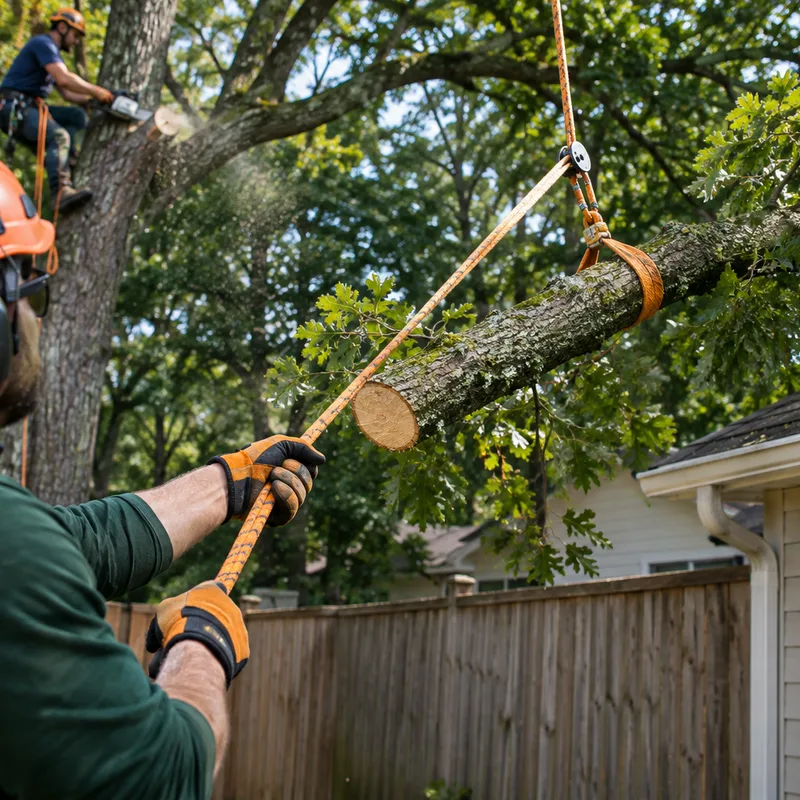
A proper pruning cut is made just outside the branch collar, the slightly raised area where a branch joins its parent stem. Cutting flush against the trunk removes protective tissue. Leaving a long stub prevents the wound from closing efficiently. Large branches are commonly removed with a multi-cut method that reduces the chance of bark tearing down the trunk.
The finished canopy should still look like the same species of tree. Interior branches should not be stripped away to create a tuft of foliage at the ends, a practice sometimes called lion-tailing. Excessive thinning can increase sun exposure on bark and concentrate weight at branch tips. Mature trees generally benefit from conservative, objective-based pruning rather than dramatic canopy removal.
Fresh pruning wounds are usually left uncovered. Routine wound paint is generally unnecessary and may interfere with natural closure, though limited exceptions can apply to certain species or disease-management situations. Recommendations should account for the individual tree rather than rely on one rule for every yard.
Request a Tree Service MatchArrange an on-property assessment when branches are damaged, pressing against a structure, blocking needed clearance, or growing with weak attachments. A written scope will clarify which cuts are recommended and how the work area will be protected.
Call to Get MatchedThe best time depends on the tree species, its condition, and the purpose of pruning. Dormant-season pruning often makes branch structure easier to inspect, but dead, broken, or hazardous limbs may need attention whenever they are found. Marietta's hot summers can add stress, so major live-branch removal may be deferred when a tree is already struggling with heat or dry soil.
A straightforward tree may take part of a day, while several large trees or complex rigging can require a full day or longer. Tree height, access through gates, branches over structures, lift setup, and debris handling affect the schedule. The work plan should include the expected duration before the crew begins.
Yes, overhanging branches can often be pruned with climbing, lift access, pole tools, or controlled rigging. The appropriate method depends on branch size, roof position, available lowering space, and the tree's condition. Clearance should be achieved through selective reduction or removal cuts rather than topping the canopy.
The safe amount varies by species, age, health, and pruning objective, so there is no responsible universal percentage for every tree. Mature or stressed trees usually call for a conservative approach. If the desired clearance would require excessive foliage removal, staged pruning or another plan may be recommended.
Property-line work should be confirmed before pruning begins, especially when ownership of the trunk is unclear or access to a neighboring yard is needed. Local rules and private agreements can affect what is allowed, and pruning should not needlessly damage the tree. A survey or legal guidance may be appropriate when the boundary is disputed.
Debris handling depends on the written scope and should be agreed before work starts. Confirm whether branches, logs, chips, and small rakeable material are included, as well as whether any wood will remain on the property. Restricted access can affect how material is carried or processed.
Keep people and tools away and contact the applicable electric utility when branches touch or closely approach energized lines. Do not use ladders, pole saws, or ropes near conductors. Utility-line vegetation work requires qualified personnel and procedures designed for electrical hazards.
Tell our concierge what concerns you about the tree, its location, and the clearance you need. We’ll help connect you with an independent company that can assess the property and provide its own trimming proposal.