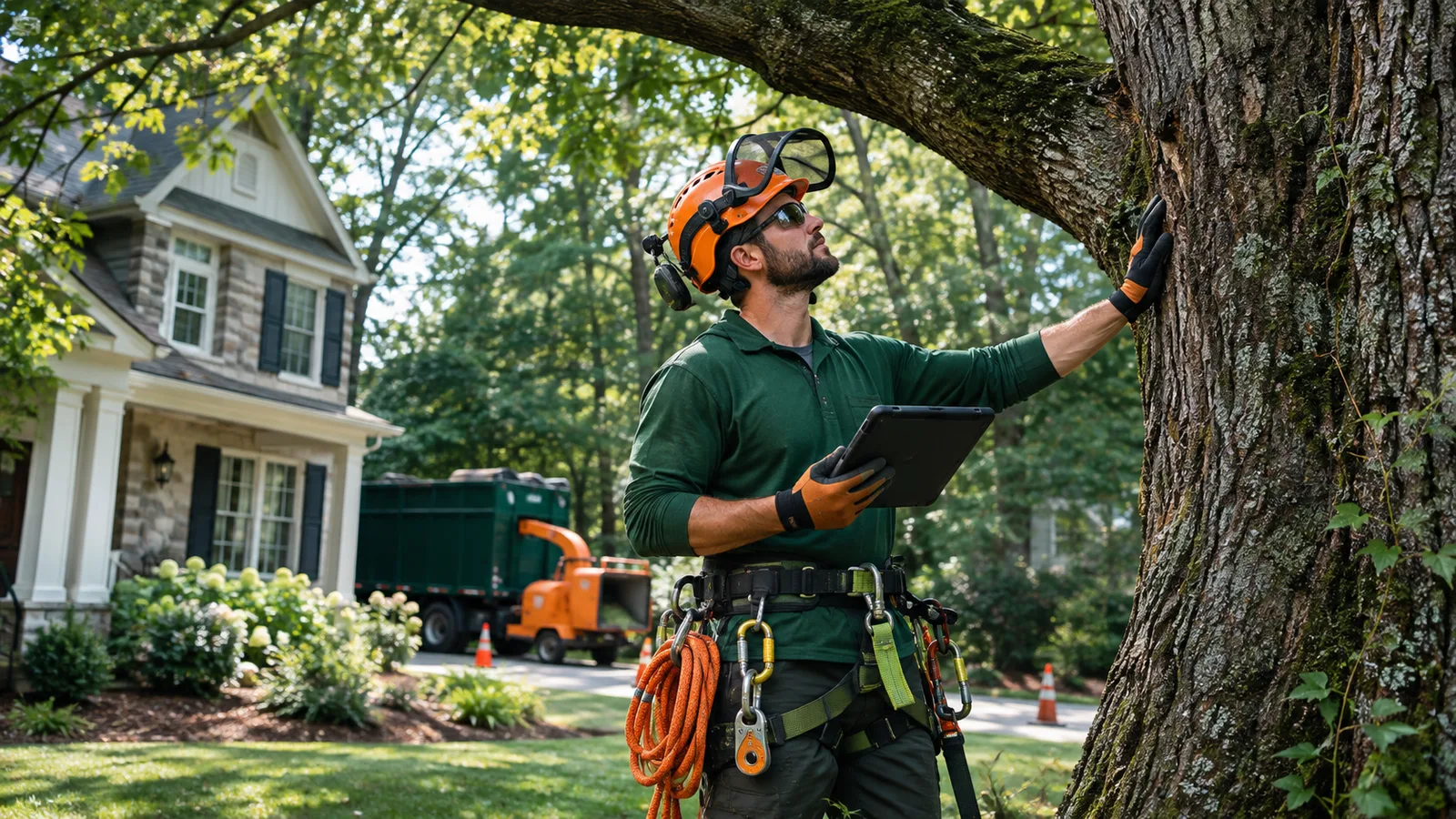
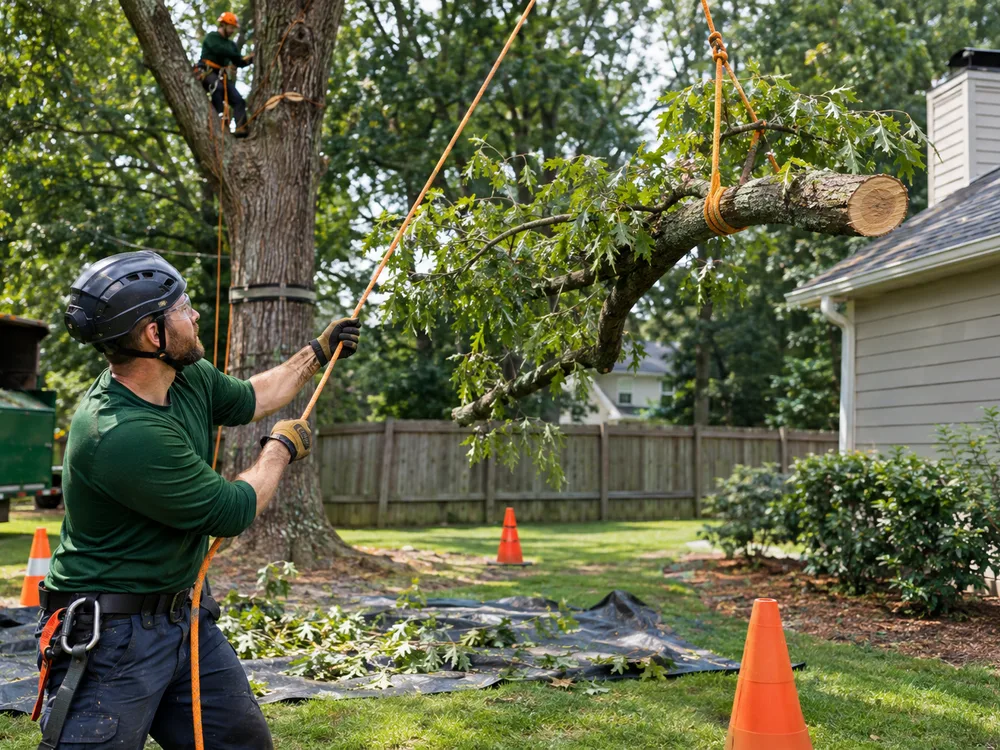
Compare more than the bottom-line price. Each estimate should identify the exact tree, the work being proposed, cleanup responsibilities, and whether stump grinding is included. Ask how the crew plans to manage limbs over structures and how equipment will enter the property. If an estimate says only “trim tree,” it leaves too much open to interpretation.
For pruning, ask about the objective and expected canopy change. Removing too much live foliage at one time can stress a tree, while indiscriminate heading cuts can create weak regrowth. Good specifications use clear terms such as deadwood removal, crown cleaning, structural pruning, clearance pruning, or reduction of a named limb. They should also avoid promising that pruning can make every tree completely safe.
For removal, confirm whether the price covers hauling wood, chipping brush, raking the immediate work area, and grinding the stump. If the tree is close to a property boundary, establish ownership before authorizing work. Trees entangled with energized conductors call for utility coordination and appropriately qualified workers; customers should not approach or touch a tree that may be energized.
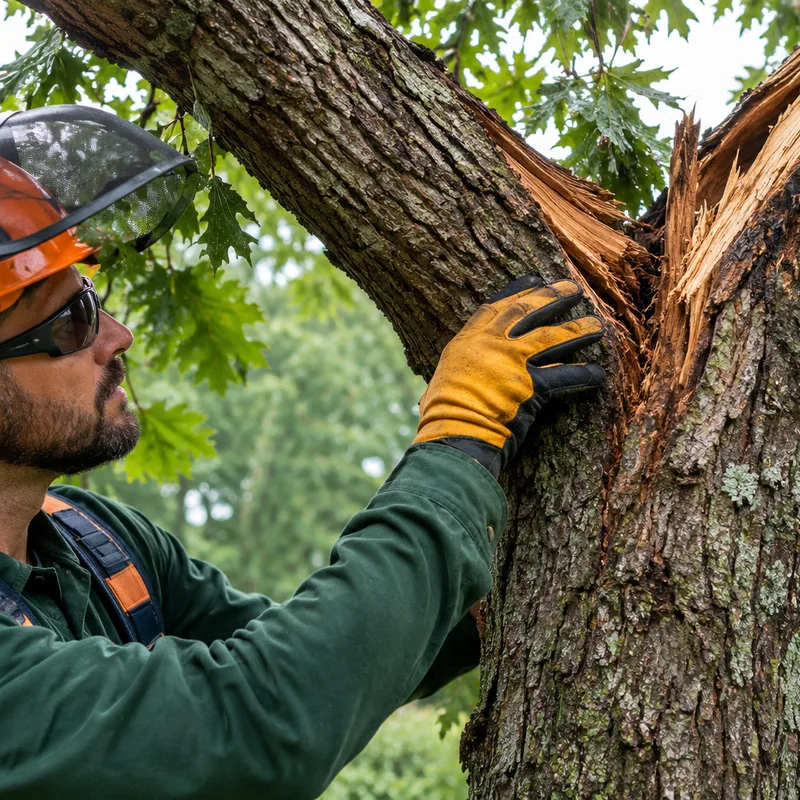
Insurance documentation and worker qualifications deserve attention. Tree work combines cutting tools, climbing, rigging, falling material, and heavy equipment. A professional proposal should match the actual risk and access conditions rather than assuming every tree can be handled the same way.