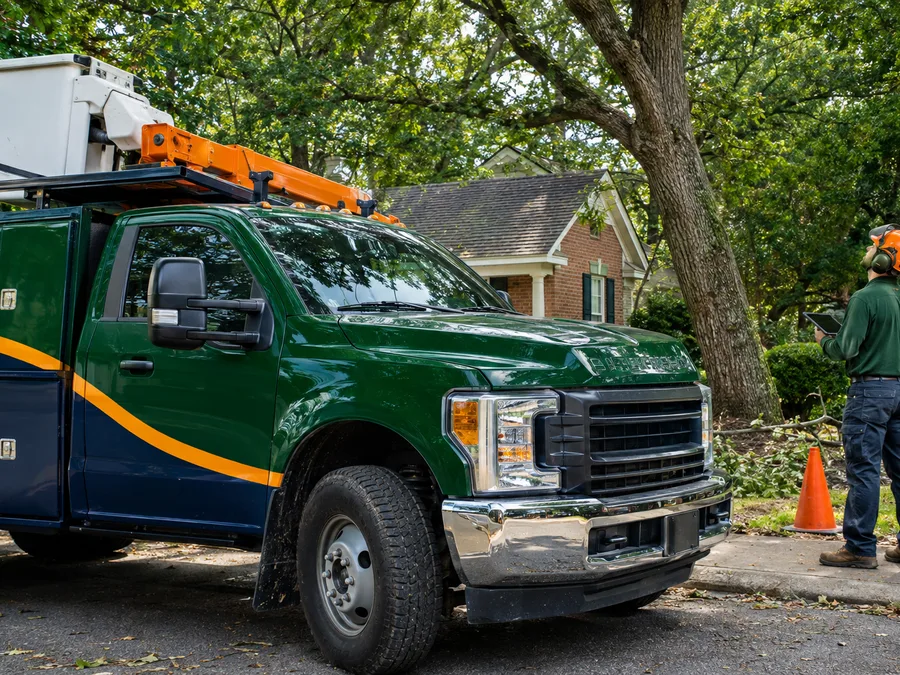
Arborist Service · Marietta, Georgia

Arborist Marietta GA

Tell us what you have noticed, and our concierge will help connect you with an independent arborist or tree service company serving Marietta.

✓ Tree and site assessed
✓ Risk and maintenance separated
✓ Practical next steps defined
A trained arborist inspecting the canopy and branch structure of a mature tree at a Marietta residential property.

Knowledgeable Tree Care Starts With a Thorough Assessment

When you need an arborist in Marietta, GA, the first step should be a close look at the tree and its surroundings. A useful assessment considers species, branch unions, canopy density, trunk condition, root-zone changes, soil drainage, and the targets that could be affected by branch or tree failure. Those targets may include a house, driveway, fence, utility line, parked vehicle, or an area where people gather.

Marietta Tree Removal Concierge does not provide arborist opinions or diagnose tree conditions. We help consumers connect with independent companies or arborists that can evaluate the tree. The provider is responsible for its qualifications, inspection, recommendations, pricing, and any work you choose to authorize.

Tree care in north Georgia must account for hot, humid summers, periods of heavy rain, thunderstorms, and occasional drought stress. Mature trees can also be affected by construction, grade changes, compacted soil, root disturbance, and repeated improper pruning. Addressing those factors early can preserve tree structure and reduce avoidable damage.

Request a Tree Service Match
Tree Assessment

What a Marietta Arborist Can Evaluate

Tree Structure and Risk

The inspection looks for weak branch attachments, included bark, deadwood, cracks, cavities, decay indicators, excessive lean, damaged roots, and other conditions that may affect stability. Risk is considered in relation to the likelihood of failure and what the tree could strike.

Pruning Needs

Pruning recommendations may include removing dead or broken limbs, improving clearance, reducing selected end weight, or correcting young-tree structure. Proper cuts are made outside the branch collar. Routine topping and indiscriminate interior stripping are avoided because both can weaken a tree.

Health and Stress

Sparse foliage, premature color change, dieback, leaf spotting, bark changes, fungal fruiting bodies, and insect activity can indicate stress or disease. Similar symptoms may have different causes, so diagnosis should come before treatment.

Root-Zone Conditions

Compaction, fill soil, trenching, poor drainage, buried root flares, and mechanical damage can impair roots. An arborist evaluates visible site conditions and may recommend mulch correction, soil management, root-collar inspection, or ongoing observation.

Cabling and Bracing

Supplemental support may be appropriate for certain weak unions or heavy limbs, but hardware does not make a tree failure-proof. The tree must be assessed for suitability, and installed systems require periodic inspection.

Tree Selection and Placement

Species choice should match available space, sunlight, drainage, mature canopy spread, and proximity to structures or utilities. Good placement reduces future conflicts and gives roots and branches room to develop.

Request a Tree Service Match

Arborist Marietta GA Guidance for Established Properties

Marietta contains a mix of established neighborhoods, newer subdivisions, commercial corridors, and wooded lots. Each setting creates different tree-care questions. Around the Marietta Square, mature trees may share limited space with sidewalks, buildings, parking areas, and frequent pedestrian activity. In East Cobb, broad residential lots may contain large canopies over roofs, driveways, and outdoor living areas. Properties near Kennesaw Mountain can have sloped or wooded ground where access, erosion, and root disturbance deserve added attention.

A responsible recommendation accounts for these site constraints before equipment or pruning methods are selected. Access for a climber, aerial lift, or rigging system must be considered alongside fences, septic components, landscaping, and overhead conductors. Trees close to energized lines require special handling; property owners should not attempt pruning near those conductors.

Season also matters. Leaf-on inspection can reveal canopy density, discoloration, and dieback, while leaf-off inspection can make branch architecture easier to assess. Storm damage warrants prompt evaluation when limbs are hanging, trunks have split, roots have lifted, or a tree has shifted toward an occupied area. Keep people away from the affected zone until it can be inspected safely.

An arborist conducting a ground-based inspection of mature trees on a wooded, gently sloped Marietta property, with the home and driveway visible as potential targets.

How the Arborist Assessment Works

  1. Step01

    Discuss Your Concern

    We begin with what you have observed, such as a broken limb, thinning canopy, fungal growth, construction near roots, poor clearance, or a recent change in the tree's position. Timing and site history can help narrow the cause.

  2. Step02

    Inspect the Tree and Site

    The arborist evaluates the tree from the ground, including the crown, trunk, visible root flare, surrounding soil, and nearby targets. Where appropriate, the assessment may identify a need for closer aerial inspection, decay testing, or another specialized evaluation.

  3. Step03

    Set Priorities

    Immediate hazards are separated from routine maintenance and long-term concerns. Recommendations account for tree condition, expected response, property use, access, and whether retaining the tree is a practical goal.

  4. Step04

    Define the Work

    The proposed scope identifies the trees involved, the objective of the work, access considerations, debris handling, and relevant limitations. Clear pruning objectives are more useful than vague directions to trim a tree.

  5. Step05

    Review Aftercare

    Some trees need monitoring, watering during dry periods, mulch adjustment, or a future inspection. If conditions may change over time, the recommended review interval should be included in the plan.

Request a Tree Service Match

Pruning Based on Tree Biology

Good pruning has a defined objective. It is not measured by how much foliage is removed. For a young tree, structural pruning may establish a suitable dominant stem and improve branch spacing. For a mature tree, the goal may be deadwood removal, targeted clearance, or selective reduction of a limb with excessive end weight.

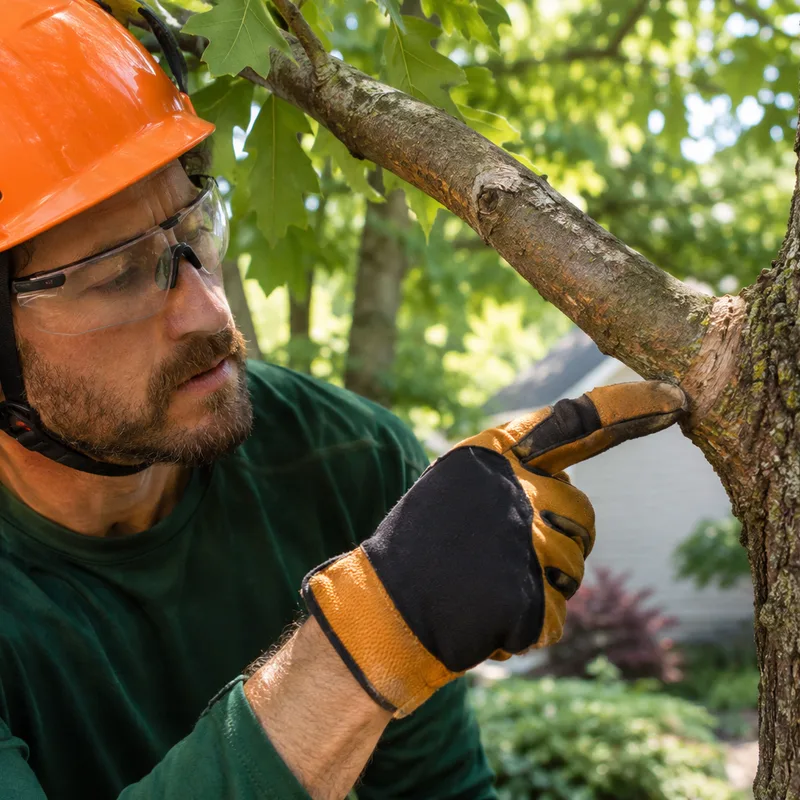
Cuts should respect the branch bark ridge and branch collar so the tree can form closure tissue around the wound. Flush cuts damage trunk tissue, while long stubs cannot close normally. Lion-tailing, the excessive removal of inner foliage, shifts weight toward branch ends and can increase stress. Topping leaves large wounds and stimulates weakly attached shoots, creating recurring maintenance problems.

A Marietta arborist should also consider how much live foliage can be removed without placing unnecessary stress on the tree. Species, age, health, season, and pruning objective all influence that decision. Specifications may follow the principles in ANSI A300 tree-care standards, with safe work practices informed by applicable arboricultural safety standards.

Close view of an arborist indicating a correct pruning location just outside the branch collar on a healthy tree limb.
Diagnosis First

Health Problems Need Diagnosis Before Treatment

Request a Tree Service Match

Tree symptoms rarely identify the cause by themselves. Yellowing leaves may relate to root stress, drainage, nutrient availability, drought, or vascular problems. Crown thinning can follow construction damage, disease, repeated defoliation, or changes in soil conditions. Mushrooms near a trunk can be harmless decomposers, or they may be associated with decayed wood. Their location and identity matter.

A useful plant-health assessment records the symptom pattern, affected plant parts, recent weather, site alterations, and progression over time. The arborist may inspect for exit holes, frass, cankers, abnormal growth, leaf lesions, girdling roots, and damage around the root flare. Samples or laboratory analysis may be appropriate when visual evidence is inconclusive.

Treatment should match the diagnosis. Options can include correcting mulch depth, improving watering practices, reducing competition, monitoring a pest, pruning infected tissue where appropriate, or recommending a labeled treatment. Some conditions cannot be cured, and unnecessary chemical applications add cost without addressing the underlying problem. Marietta Tree Removal Concierge focuses on a practical plan based on visible evidence and the value of preserving the tree.

If a tree has changed after a storm, construction work, or a period of decline, arrange an assessment before the condition becomes harder to manage.

Call to Get Matched
Practical Answers

Questions About Hiring an Arborist in Marietta

How much does an arborist in Marietta cost?+

The cost depends on whether you need a basic consultation, a written assessment, specialized testing, or tree work that requires a crew and equipment. Tree size, number of trees, site access, proximity to structures, climbing requirements, and the level of documentation all affect pricing. A ground-based opinion for one tree is different in scope from an inventory or formal risk assessment. The exact cost should be confirmed after the property and requested deliverables are understood.

When should I ask a Marietta arborist to inspect a tree?+

Arrange an inspection when you notice hanging branches, a new crack, trunk splitting, root lifting, sudden lean, rapid canopy decline, or fungal growth near the base. An assessment is also useful before construction, trenching, grade changes, or major pruning near a mature tree. After a north Georgia thunderstorm, restrict access around any tree with visible structural damage until it has been evaluated.

Can an arborist tell whether a tree is dangerous?+

An arborist can assess visible defects, likelihood of failure, potential impact, and consequences, but no living tree can be declared completely safe. Risk assessment considers the tree, the site, nearby targets, and the time period covered by the evaluation. Some findings justify immediate action, while others can be managed through pruning, support, moving a target, or scheduled monitoring.

Is topping an acceptable way to reduce a large tree?+

Topping is generally not an acceptable pruning method because it creates large wounds and often triggers dense, weakly attached shoots. If a tree is too large for its location, an arborist may consider selective reduction cuts, phased pruning, or removal when the conflict cannot be managed responsibly. The suitable option depends on species, condition, structure, and the amount of live crown that would need to be removed.

Can a tree be inspected before building or landscaping work starts?+

Yes. Preconstruction review is preferable because roots can be damaged long before canopy symptoms appear. An arborist can identify priority trees, approximate root-protection areas, access concerns, and activities that may compact or remove soil. For established Marietta lots, planning should occur before excavation, trenching, equipment traffic, or material storage begins near mature trees.

How quickly can storm-damaged trees be assessed?+

Response timing depends on weather, safe access, and the number of affected properties, with conditions that threaten occupied areas taking priority. Keep people, pets, and vehicles away from suspended limbs, split trunks, and fallen conductors. Do not approach a tree touching a utility line; report the electrical hazard to the appropriate utility or emergency authority.

Should I get a written scope before authorizing tree work?+

Yes. A written scope should identify the tree, the objective, the planned work, debris handling, access assumptions, and any exclusions. Pruning descriptions should be specific enough to distinguish deadwood removal, clearance, structural pruning, and crown reduction. This allows you to compare proposals on the actual work rather than price alone.

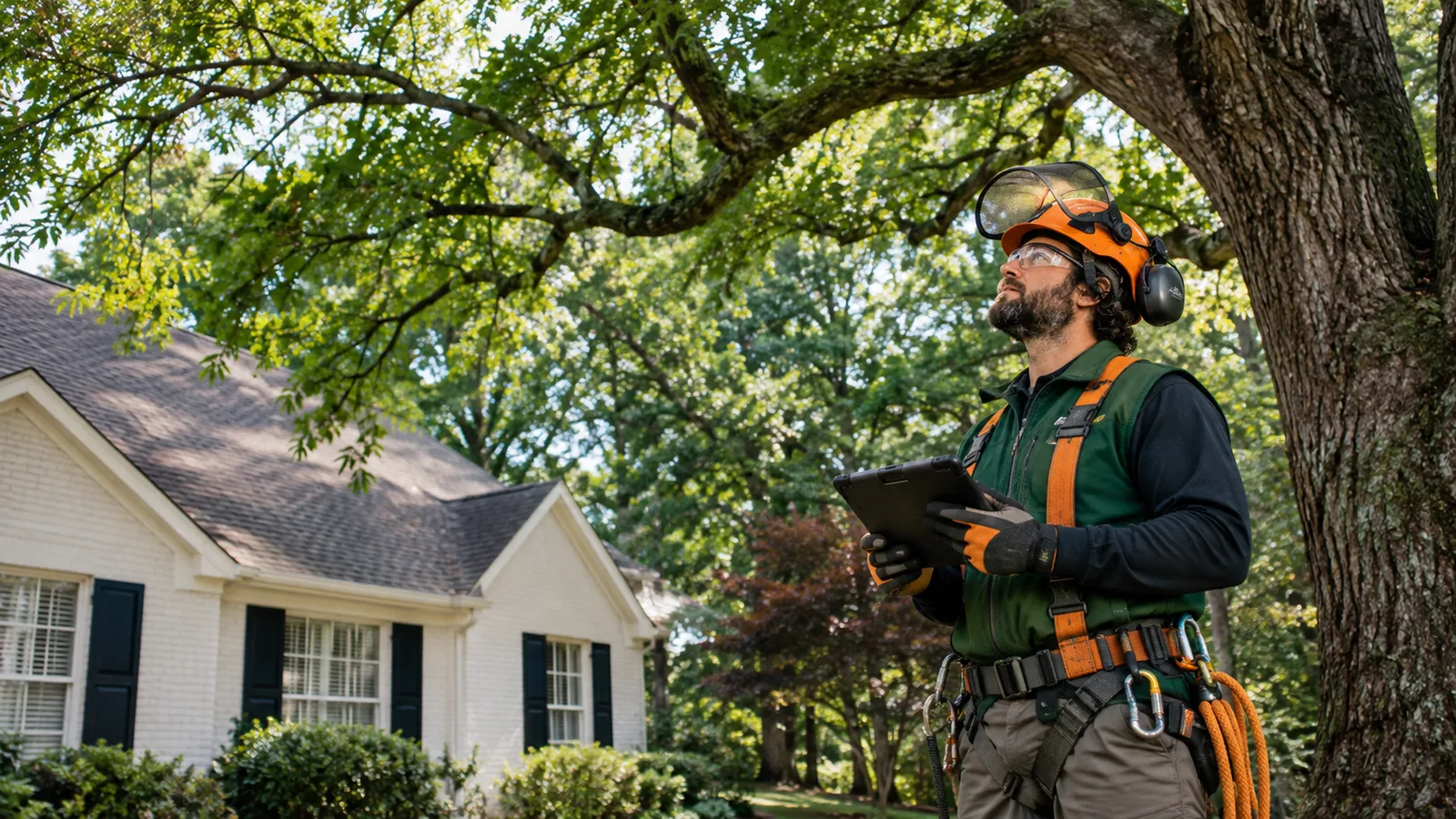
Get a Clear Plan for Your Trees

Tell our concierge what you have noticed and what you want to protect. We’ll help connect you with an independent provider that can assess the tree and recommend the next step.