A Tree Has Hit a Structure
A trunk or large limb resting on a roof, garage, deck, or vehicle can shift as damaged wood breaks. Removal must account for the load already transferred to the structure.
Connecting consumers with tree service companies in Marietta and surrounding areas
Describe the urgent hazard, and our concierge will try to connect you with an independent emergency tree service company serving Marietta.
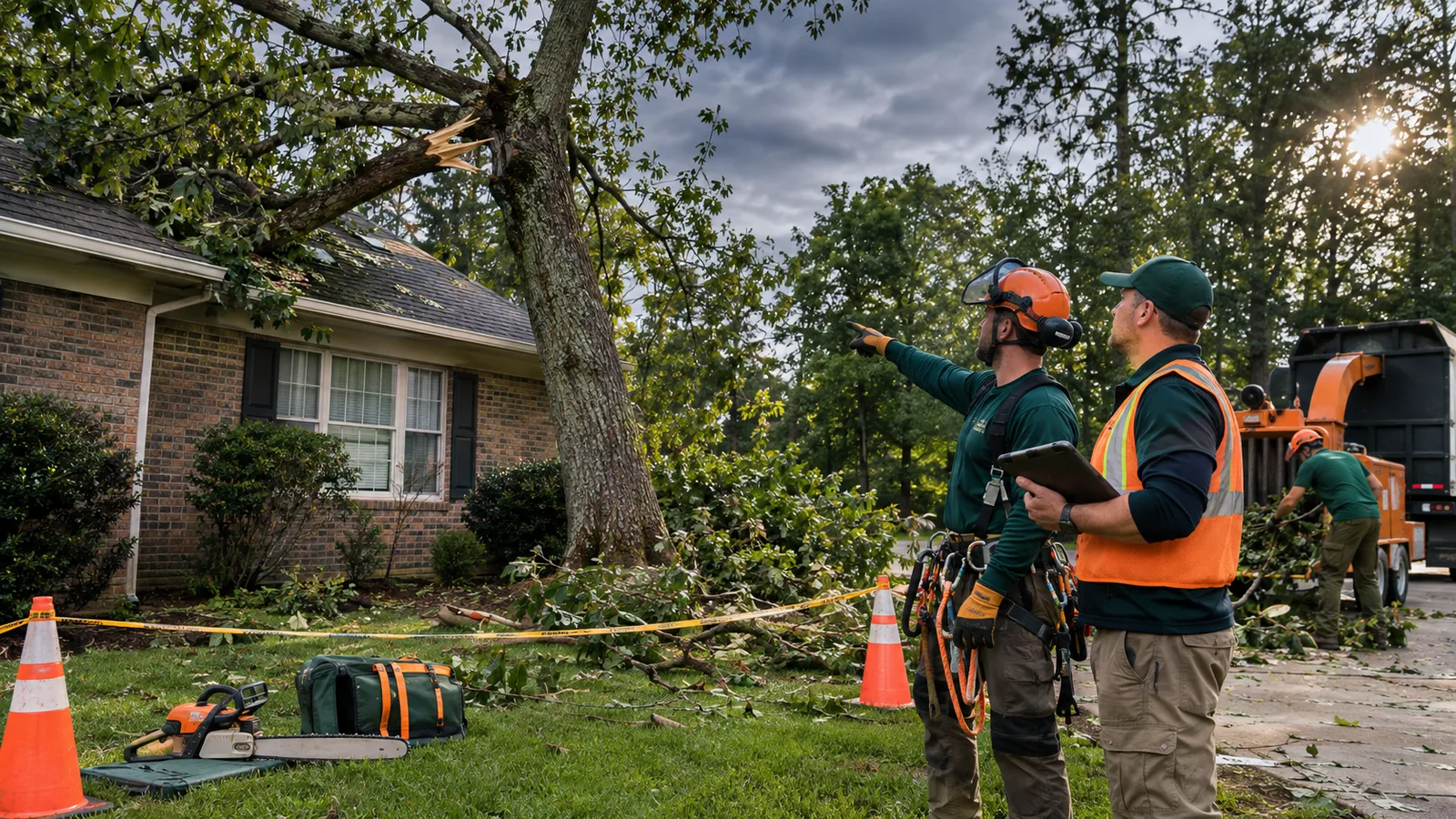
When a tree falls across a driveway, splits over a roof, or starts leaning after a storm, waiting can increase the danger. Emergency tree removal Marietta GA property owners request requires a controlled response based on the tree's condition, nearby targets, access, and contact with utilities or structures.
Marietta Tree Removal Concierge is a referral and matching service; we do not dispatch our own crew or perform emergency work. We collect the details of the hazard and, when a suitable provider is available, help connect you with an independent company that determines its own response priority, availability, safety plan, and pricing.
Keep people and pets away from the affected area. Do not walk beneath hanging limbs, touch a tree resting on a utility line, or try to cut a loaded trunk. Bent limbs and suspended trunks can release stored energy without warning. If a tree has brought down a line, treat the line as energized and contact the utility or emergency services before approaching.
Request a Tree Service MatchA trunk or large limb resting on a roof, garage, deck, or vehicle can shift as damaged wood breaks. Removal must account for the load already transferred to the structure.
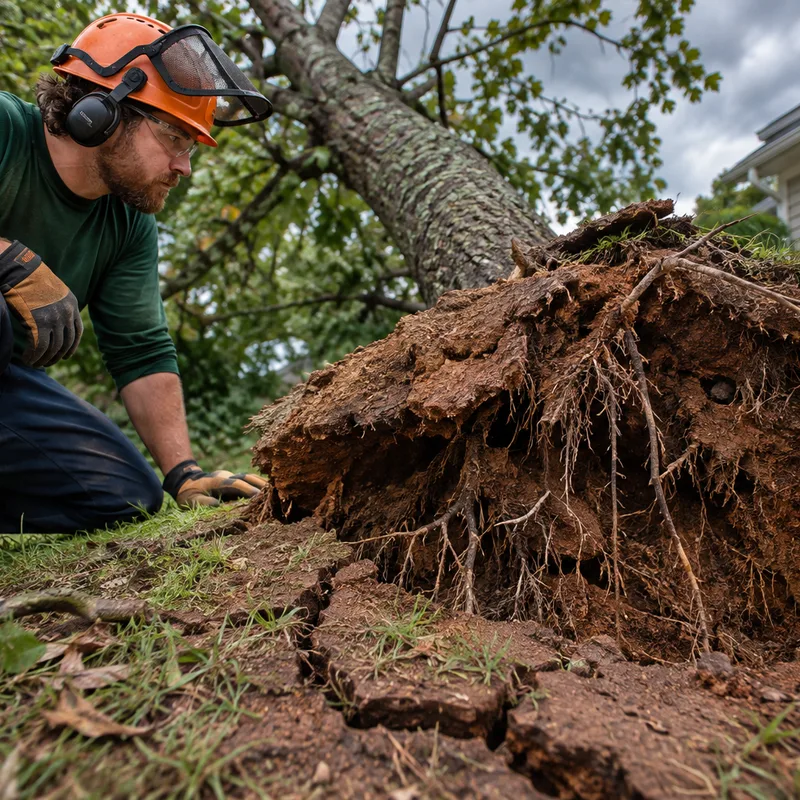
Freshly exposed roots, raised soil, or a widening lean can indicate root failure. Saturated ground and strong winds can make further movement more likely.
Open cracks, separated co-dominant stems, and hanging leaders may fail suddenly. Rigging is often needed to lower unstable pieces without allowing a free fall.
A tree across a driveway or private road may prevent residents or emergency vehicles from entering and leaving. The first objective may be opening a safe travel lane.
Broken limbs caught in the canopy are commonly called hangers. They can fall with little warning and should not be pulled down from the ground by an untrained person.
Any tree touching or resting near a power line requires utility coordination. Georgia Power advises customers to report downed lines and stay well away from them.
Emergency removal starts with a job-site assessment rather than an immediate cut. The crew evaluates trunk cracks, root movement, canopy failure, electrical hazards, escape routes, equipment access, and anything within the potential drop zone. A tree under tension may react differently from a standing tree, so the cutting sequence matters.
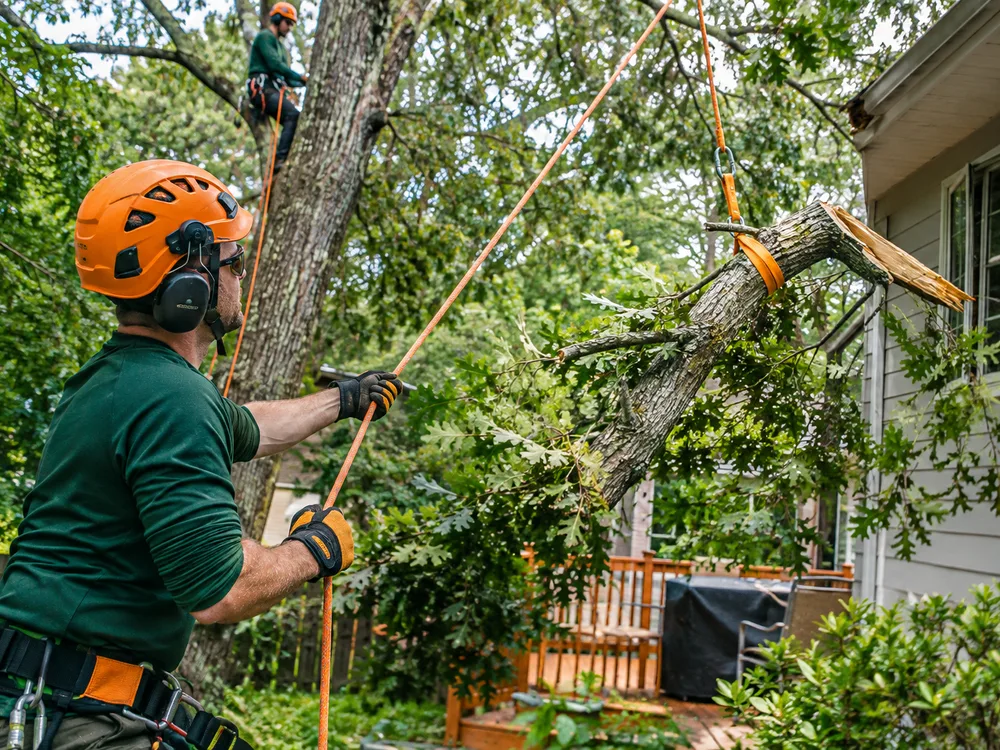
When open space is limited, the tree may be dismantled in sections. Ropes, friction devices, blocks, and lowering lines help control limbs and trunk pieces. A crane or other lifting equipment may be considered when a tree is resting on a structure, has severe structural failure, or cannot be lowered safely through the available space. Ground protection and controlled debris handling also matter around lawns, driveways, fences, and neighboring property.
Marietta's mature residential areas can place large trees close to homes and narrow access points. In established areas such as Whitlock, older homes and established tree cover can leave little room for free-fall removal. Near Marietta Square, tighter lots and nearby streets can affect equipment placement and traffic control. In East Cobb residential areas, backyard access and fences may determine whether compact equipment, extensive rigging, or a crane-assisted plan is practical.
Share what happened, whether the tree moved recently, what it is touching, and whether access or utility lines are affected. Photos taken from a safe location can help clarify the immediate conditions.
The crew identifies the drop zone, unstable wood, utility exposure, nearby structures, and safe positions for workers and equipment. Work does not begin in an energized utility zone until the responsible authority has made it safe.
The removal sequence is selected according to the tree's loading and available space. Sections may be cut, rigged, lifted, or lowered to prevent sudden movement and limit additional impact.
Driveways, walkways, and work areas are opened according to the agreed scope. Wood and brush handling should be confirmed before work starts because emergency stabilization and full debris removal are separate scope decisions.
Take photos before cleanup when it is safe to do so, and keep the written scope and invoice. These records may help if you submit a homeowners insurance claim.
Emergency tree removal in Marietta typically ranges from about $800 to $3,500, while large, storm-damaged, crane-assisted, or structure-contact removals can cost more. A smaller fallen tree with easy access may fall near the lower end.
Price changes with trunk size, instability, utility involvement, equipment access, roof or vehicle contact, after-hours conditions, rigging needs, and debris volume. Stump grinding, extensive hauling, and structural protection may be separate items. The exact cost is confirmed after the hazard and work area are inspected.
Request a Tree Service MatchMove everyone away from the tree and create as much distance as the property permits. Avoid standing on the side toward which the tree is leaning. If the tree blocks a public street, threatens people, or has caused an immediate life-safety emergency, contact local emergency authorities. Cobb County Emergency Management Agency provides storm and emergency guidance for county residents, while utility hazards must be reported directly to the responsible utility.
Do not climb onto a roof to inspect damage during wind or rain. Photograph the scene only from a stable, protected location. If it can be done without entering the drop zone, move vehicles and outdoor belongings away from nearby trees. Do not use a chainsaw on a bent trunk, root ball, or limb trapped under another object. Compression wood can pinch a saw, while tension wood can split or spring toward the operator.
Gather practical details for the assessment: where equipment can enter, whether gates or fences limit access, what the tree struck, and whether an insurer has requested documentation. Emergency removal addresses the unstable tree. Roof repair, utility restoration, and structural work require the appropriate contractors or authorities.
A damaged tree can shift as wind, rain, and gravity change its load. Describe the hazard and get a clear removal plan before anyone enters the drop zone.
Call to Get MatchedResponse timing depends on current storm demand, road conditions, utility hazards, equipment needs, and the tree's location. A tree blocking the only driveway or resting on an occupied structure may receive a different priority than damaged wood in an isolated part of a yard. Work near an electrical line cannot proceed until the utility has addressed the energized hazard.
Contact the responsible utility and keep everyone far away from the tree and line. Georgia Power tells customers to treat every downed line as energized and avoid touching anything the line contacts. Do not drive over the line or attempt to move a limb from it. Emergency tree work can be assessed after the electrical hazard is controlled.
Controlled removal can often reduce the chance of additional damage, but the method depends on how the tree is loaded against the structure. Crews may use rigging, sectional cutting, or crane assistance to lift or lower pieces rather than dragging them across the roof. Existing structural instability can affect what is safe, so the roof and tree must be assessed before cutting.
Coverage depends on the policy, what the tree damaged, and why removal is required. Insurers often distinguish between a tree that damages an insured structure and one that falls harmlessly in the yard. Photograph the damage from a safe location, preserve invoices and written scopes, and ask the insurer what documentation it requires before nonessential cleanup.
Cleanup is included only when it appears in the agreed work scope. Confirm whether the price covers brush chipping, log removal, raking, driveway clearing, and hauling. Stump grinding is commonly scheduled separately because the immediate priority is removing unstable wood and restoring safe access.
Permit or notification requirements depend on the property's jurisdiction, tree status, and circumstances. Properties may fall within the City of Marietta or unincorporated Cobb County, which can have different rules. Emergency conditions do not make documentation unnecessary, so keep photographs of the hazard and verify local requirements when conditions allow.
Partial removal is appropriate only if the remaining tree can be left in a reasonably stable condition. A broken limb may be removable while the trunk remains sound, but a split union, uprooted root plate, or major trunk crack can make full removal the safer scope. The decision should follow an on-site assessment of defects, loading, and nearby targets.
Tell our concierge what the tree is touching, whether access is blocked, and if utility lines are nearby. We’ll use those details to seek an appropriate independent provider; call emergency authorities or the utility first for immediate life-safety or electrical hazards.