Limited Drop Zone
A tree close to a home, fence, street, or neighboring lot may need to be dismantled in sections. Ropes and controlled lowering can keep heavy pieces out of restricted areas.
Connecting consumers with tree service companies in Marietta and surrounding areas
Tell us about the tree and property, and our concierge will help connect you with an independent tree cutting company serving Marietta.
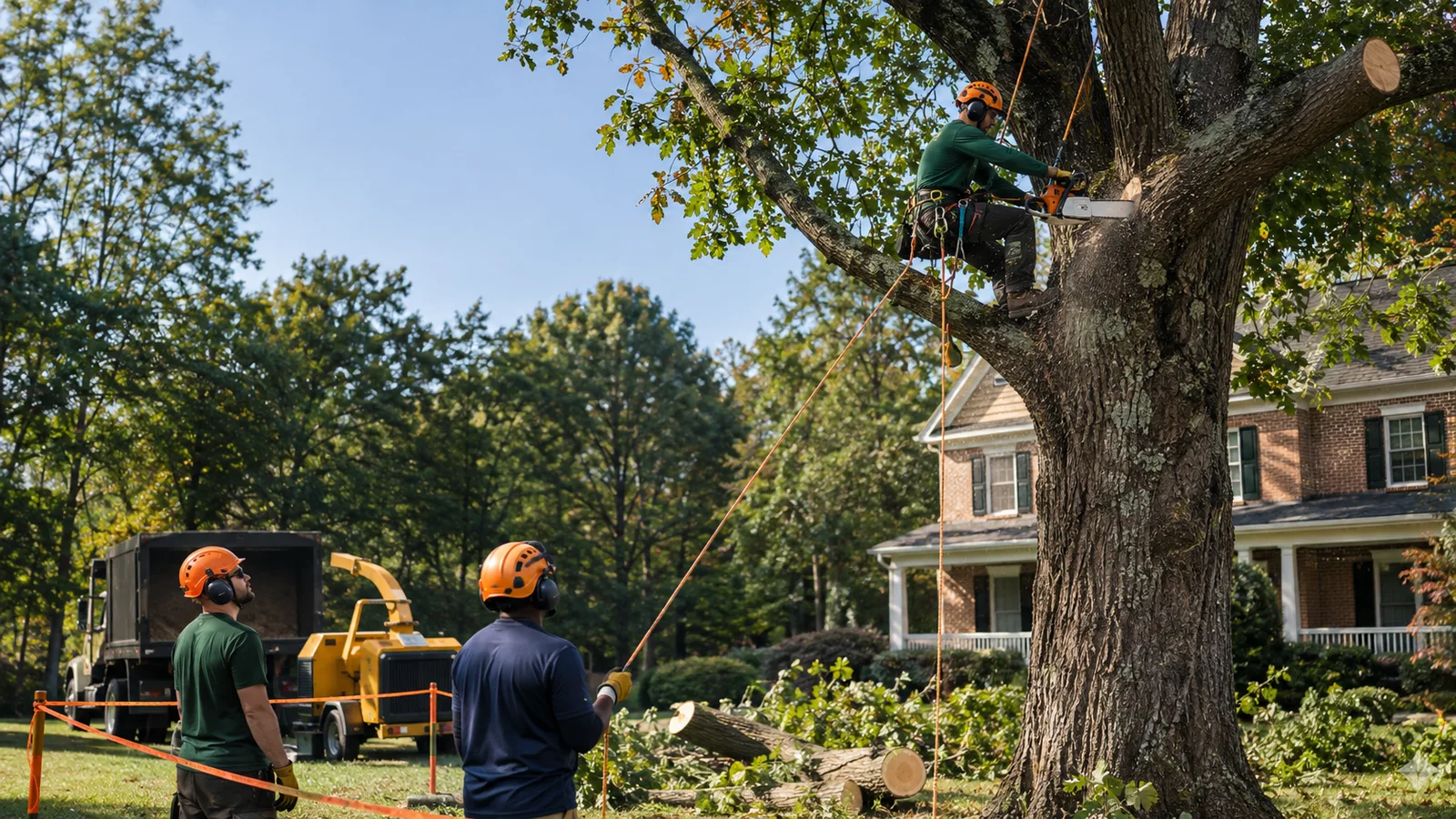
Tree cutting in Marietta, GA, requires more than a saw and an open patch of ground. Mature trees may stand close to roofs, fences, driveways, utility lines, or neighboring property. Before work begins, the crew should assess the tree's lean, trunk condition, branch weight, surrounding targets, and available access. Those details determine whether the tree can be felled in one piece or must be dismantled in smaller, controlled sections.
Marietta Tree Removal Concierge does not cut trees or supervise crews. We help consumers connect with independent tree service companies. The provider you speak with is responsible for inspecting the tree, selecting a work method, supplying credentials and insurance information, setting the price, and completing any work you authorize.
Tree cutting may be appropriate when a tree is dead, structurally unsound, badly damaged, growing into an unsuitable location, or interfering with a planned use of the property. A visual assessment helps define the scope, but internal decay and root problems are not always visible from the ground. Any sudden lean, fresh soil movement near the roots, hanging limb, or newly opened trunk crack deserves prompt attention.
Request a Tree Service MatchLocal properties vary widely. Established areas near Marietta Square often have tighter lots, mature canopies, rear access limits, and buildings close to the work zone. East Cobb properties may offer more yard space, but long driveways, fences, pools, and landscaped beds can still restrict equipment placement. Around Kennesaw Mountain, sloped ground can affect crew footing, rigging angles, and the path used to carry or move cut material. In Whitlock, large trees around older homes may require sectional cutting because there is not enough open space for conventional felling.
Georgia thunderstorms can expose weak attachments and add weight to broad canopies. Saturated ground may also reduce root support and limit where heavy equipment can travel without rutting the lawn. A responsible plan accounts for current ground conditions rather than assuming access will remain firm after rain.
Branches near overhead conductors require special caution. Cobb EMC and Georgia Power both publish guidance about vegetation around electrical equipment, but the applicable utility depends on the property. Do not approach a fallen or hanging limb that is touching a wire. Treat the conductor as energized, keep people away, and contact the serving utility before arranging ordinary tree work.
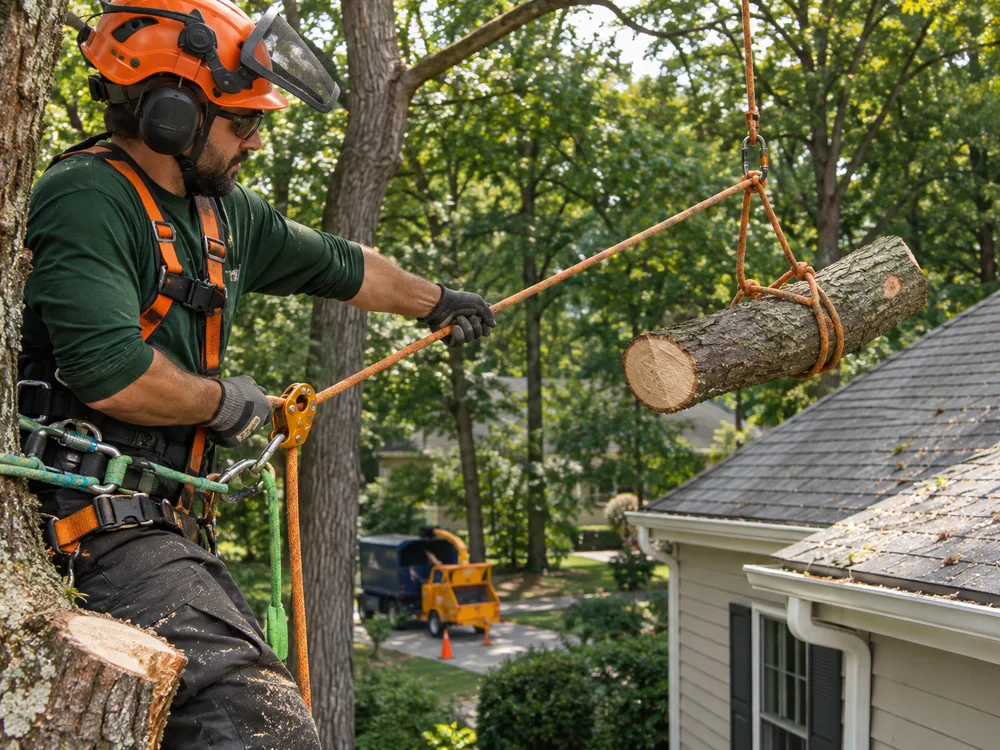
A tree close to a home, fence, street, or neighboring lot may need to be dismantled in sections. Ropes and controlled lowering can keep heavy pieces out of restricted areas.
Dead branches can break without warning, while cavities, included bark, and trunk cracks may change how the tree reacts during cutting. The work method should account for those defects.
Split leaders, suspended limbs, and trees resting on other trees may hold stored tension. Cutting the wrong point can release that force suddenly, so damaged trees require a deliberate sequence.
Narrow gates, retaining walls, slopes, septic areas, and soft ground affect equipment choices. Access planning also determines how wood and brush will leave the property.
Heavy limbs extending over roofs, parked vehicles, play areas, or patios should not be allowed to fall freely. Rigging can divide the load into manageable pieces.
A tree near a property line should be addressed only after ownership and permission are clear. Cutting across a boundary can create legal and neighbor disputes.
The first step is to examine the tree, identify defects and nearby targets, review access, and clarify exactly which tree or limbs are included. The assessment also checks for overhead wires and obstacles that may affect equipment.
The proposed method should state whether the tree will be felled or dismantled, how debris will be handled, and what cleanup is included. Stump work is a separate scope unless it is specifically listed.
People, pets, vehicles, and movable property are cleared from the drop zone. The crew establishes cutting and escape paths, then positions ropes, protective materials, and equipment as needed.
The crew removes material in the planned sequence. Directional notches and back cuts may guide open-area felling, while sectional work can use rigging blocks, lowering lines, and friction devices to manage pieces.
Cut branches and trunk sections are processed according to the written scope. The work area is then raked or blown clear of smaller debris, with any agreed wood placement completed before departure.
Conventional felling is suitable only when there is enough clear space and the tree's condition allows predictable control. A face notch establishes the intended direction, and a back cut leaves hinge wood that helps guide the trunk as it falls. Wind, lean, crown weight, defects, and surrounding targets can change that plan. A tree should never be felled toward an area that has not been cleared and secured.
Sectional dismantling is often better for confined residential work. A climber or aerial-lift operator removes branches and trunk pieces progressively. Some pieces can be dropped into a protected zone, while others must be tied and lowered. Speed lines may move branches away from structures, and a lowering device can help manage heavier loads. Crane-assisted cutting may be considered when access, tree condition, or the placement of large sections makes conventional rigging impractical.
Cleanup terms should be settled before work starts. Ask whether brush will be chipped, trunk wood will be hauled away or left in manageable lengths, and sawdust will be collected. Also confirm whether temporary ground protection is planned for turf or pavement. A written scope makes it easier to compare estimates based on the same work.
Tree cutting in Marietta typically costs about $400 to $2,500 for a single tree, while very large, hazardous, crane-assisted, or emergency work can exceed $3,000. Small, accessible trees are usually at the lower end; mature trees near structures often cost more.
Final pricing depends on height, trunk diameter, condition, species, lean, rigging needs, equipment access, debris volume, and whether hauling or stump work is included. Utility conflicts and storm damage can also change the method. The exact cost is confirmed after an on-property assessment and written scope.
Request a Tree Service MatchA good estimate identifies the tree, the planned work, and the cleanup standard. It should distinguish complete cutting from limited limb removal and state what happens to logs, brush, and wood chips. If a gate, driveway, lawn, or neighboring property is needed for access, settle those details before equipment arrives.
Ask how the work zone will be controlled and whether the method calls for climbing, an aerial lift, rigging, or a crane. The lowest estimate may omit hauling, difficult access, or restoration of disturbed areas. Compare the full scope rather than the final price alone. It is also reasonable to request current proof of insurance and to clarify who is responsible for permits or approvals if they apply to the property.
Homeowners should avoid cutting any tree that can reach a building, roadway, or power line, as well as any trunk with a severe lean, visible split, or storm-loaded branches. Chainsaws, ladders, and tensioned wood are a dangerous combination. Professional equipment does not remove every risk, but trained planning and controlled techniques reduce unnecessary exposure.
Get the tree, access conditions, cutting method, debris handling, and cleanup expectations documented before the work is scheduled.
Call to Get MatchedUrgent work is prioritized by immediate risk, crew access, and utility involvement. A tree on an occupied structure or blocking essential access may require prompt stabilization, while a branch touching an electrical conductor must be addressed with the serving utility involved. Widespread storms across Cobb County can increase demand and extend scheduling.
Permission requirements depend on the property's jurisdiction, ownership restrictions, and the proposed work. A Marietta street address may fall within the City of Marietta or unincorporated Cobb County, and neighborhood covenants may add separate rules. Confirm the governing jurisdiction and any applicable approval before cutting.
Lawn impact can often be reduced, but it cannot be guaranteed on every job. Plywood or ground-protection mats may spread equipment weight, and rigging can keep large pieces from striking turf. Soft soil after heavy Georgia rain, narrow access, and the volume of trunk wood all affect the result.
Debris removal is included only when it appears in the agreed scope. Confirm whether brush will be chipped, logs hauled away, wood chips removed, and small debris raked or blown from the work area. Stump grinding and removal of underground roots are commonly priced separately.
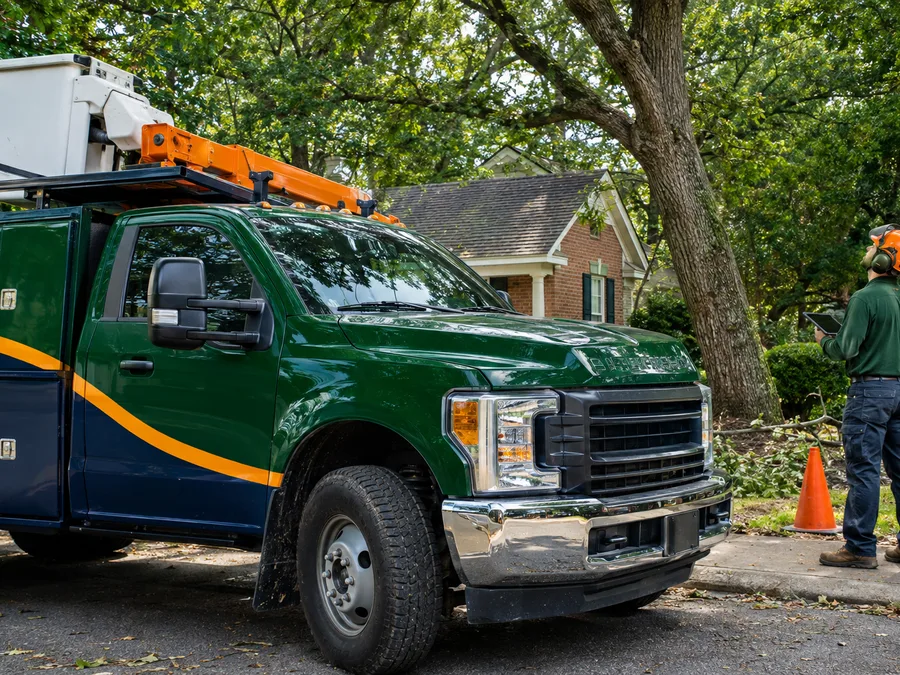
A tree close to a structure can often be dismantled in controlled sections rather than felled whole. The crew may use climbing systems, an aerial lift, ropes, rigging blocks, or crane support depending on access and tree condition. A property assessment is needed to select the method.
A new or increasing lean should be assessed promptly, especially when it is accompanied by cracked soil, exposed roots, trunk splitting, or recent storm damage. Some trees naturally grow at an angle, but fresh movement can indicate lost root support. Keep people and vehicles outside the potential fall area until the condition is evaluated.
Many straightforward single-tree jobs can be completed within a working day, while large trees, restricted access, extensive rigging, or crane coordination may take longer. Cleanup and hauling also affect the schedule. The time estimate becomes clearer after the tree and access route are inspected.
Tell our concierge about the tree, nearby structures, access concerns, and recent damage. We’ll help connect you with an independent company that can assess the property and prepare its own work proposal.